Glassy- Eyed Reflections ,April, 2015(Lam Ming Yin Alison)
Having withstood the temptations of service trips for fear of failing Specialty Clerkship, it was only lunching with Dr Callie Ko and other students as part of the Women Doctors Association Mentor Mentee Program and hearing about her stories of the Orbis Flying Eye Hospital that inspired me to simply get up and go. Armed with that much-needed push through the doors of Queen Mary Hospital, I set off with fundoscope in one hand and stethoscope in the other (no harm getting some clerking done along the way!) for a program offering sponsored cataract operations to the under-served in Meizhou (梅州), China.
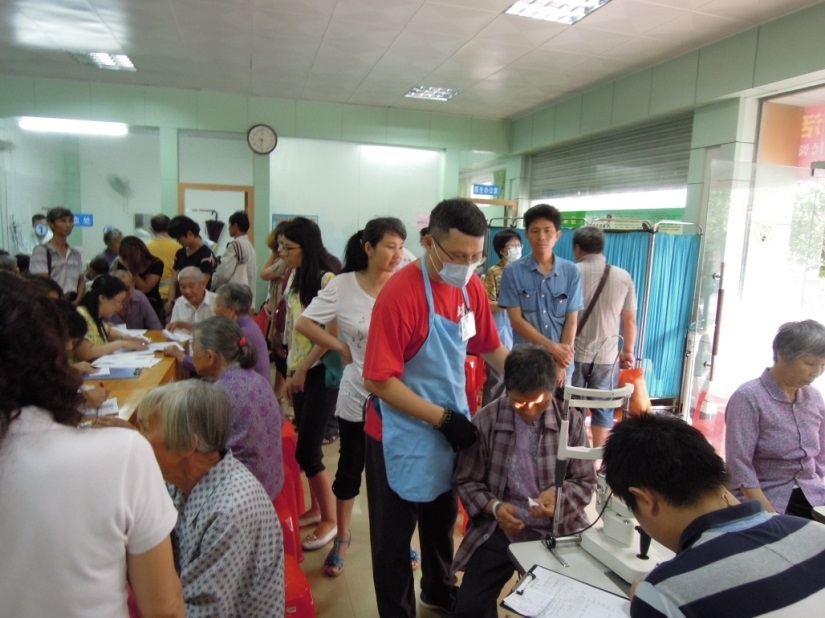
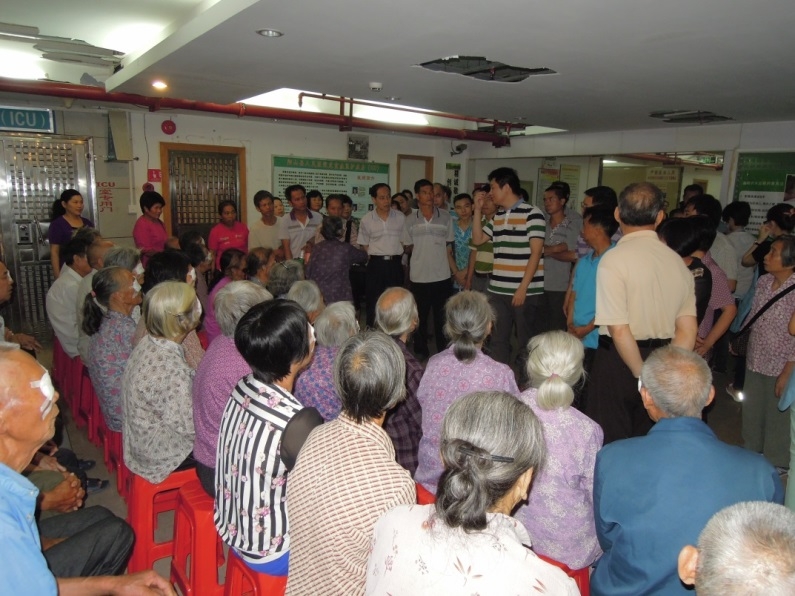
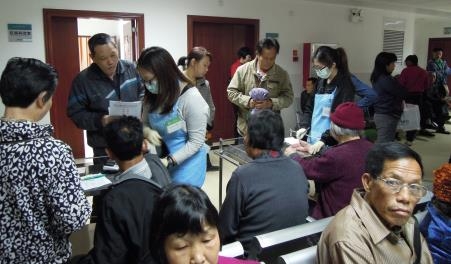
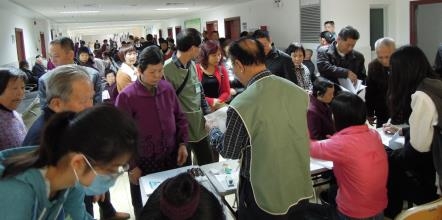
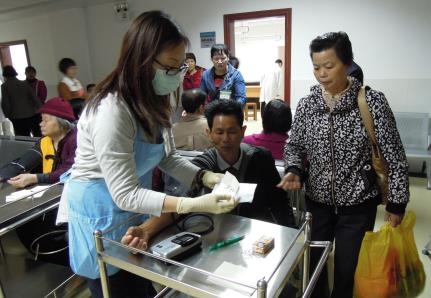
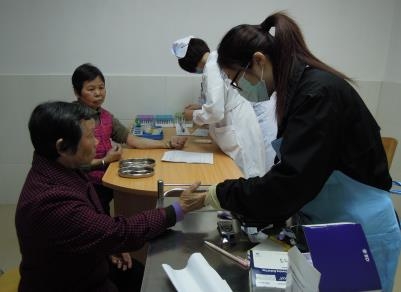
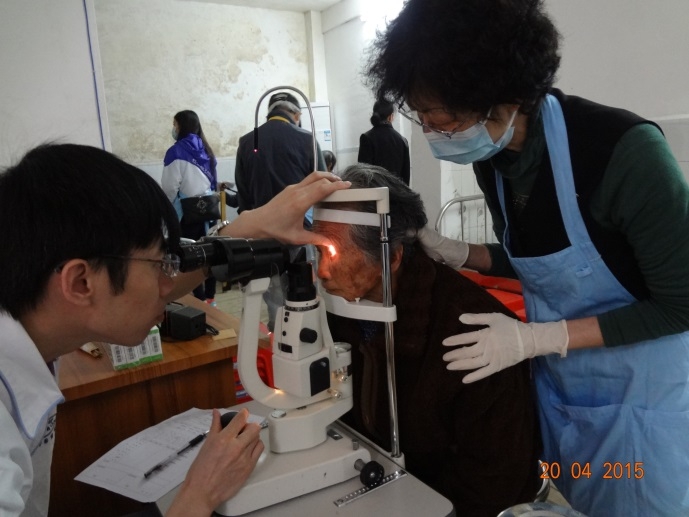
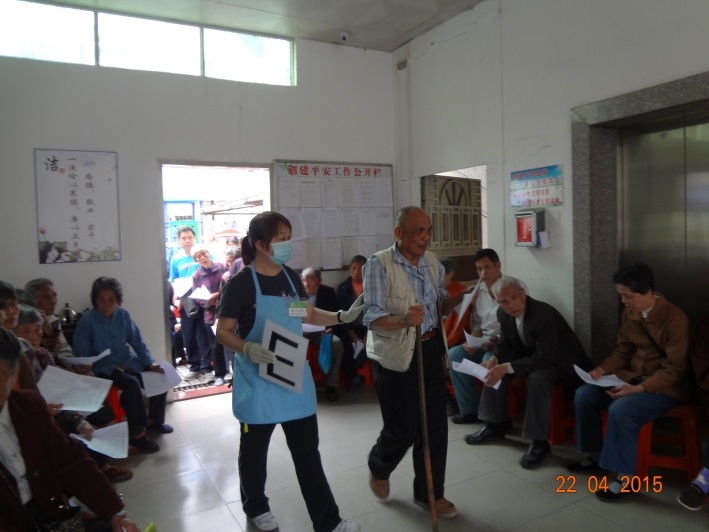
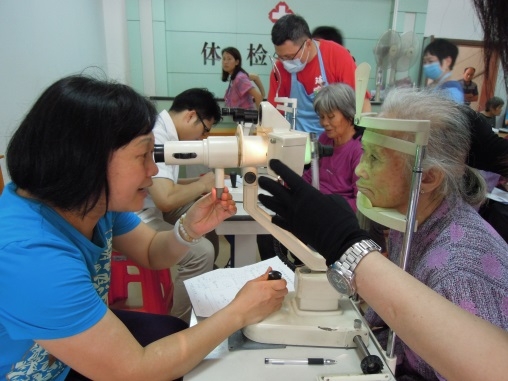
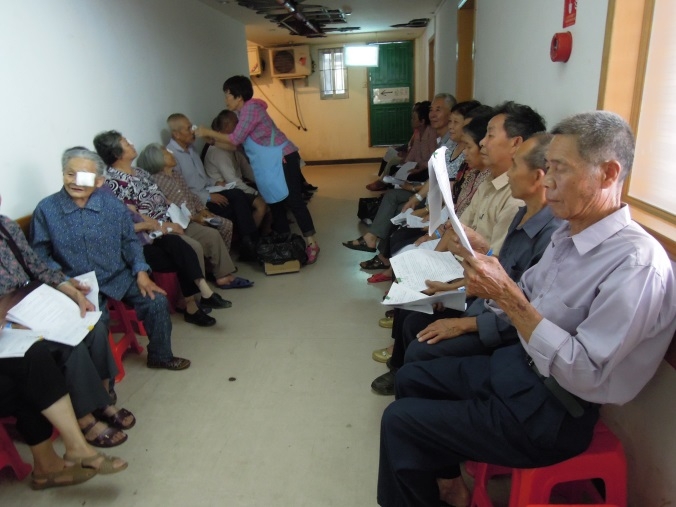
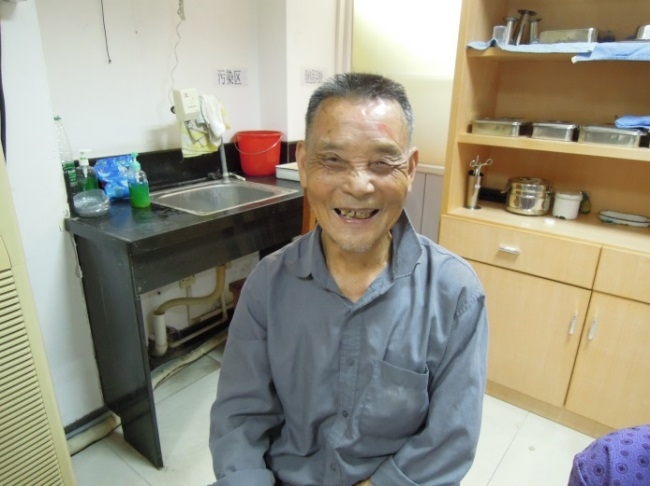
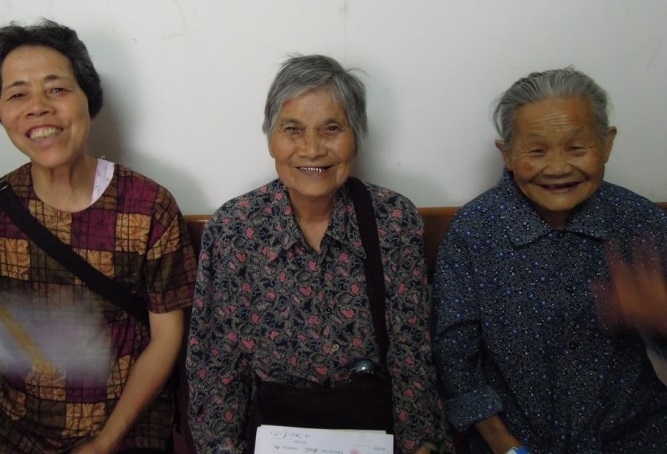
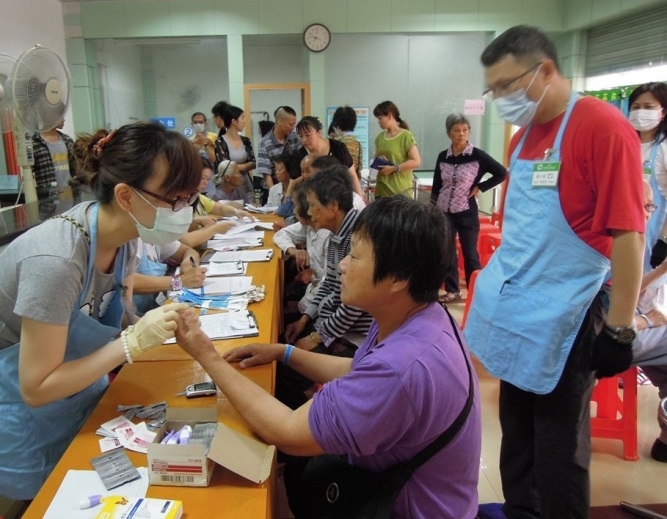
Not knowing what to expect at seven in the morning on my very first day, I arrived Yue Dong Hospital only to find myself engulfed by hordes of villagers who had long since arrived from towns as far as three hours away - every one of them anticipating an end to what must have seemed like a lifetime of stumbling through haziness (walking into pillars/people bleary-eyed). As I maneuvered my way through clans of anxious relatives, taking in the hopeful smiles of cloudy-eyed patients while being careful not to step on the plastic water buckets strewn across the floor (the use of which I will divulge later), it soon became apparent to me that screening them for hospital admission was just one single step out of a service line that had started long before I came, beginning with recruitment and preliminary rounds of assessments in remote villages scattered across the Meizhou county. Most important of all, seeing how far these patients have come both figuratively and physically with the help of so many volunteers ahead of me opened my eyes to the impact of our responsibilities in pre-operative assessment. Determined to retain as many of our recruits as is medically possible, I set up camp at once with my blood pressure monitors, Snellen charts and hemesticks, and opened the doors to the first surge of eager patients. Let the screening begin!
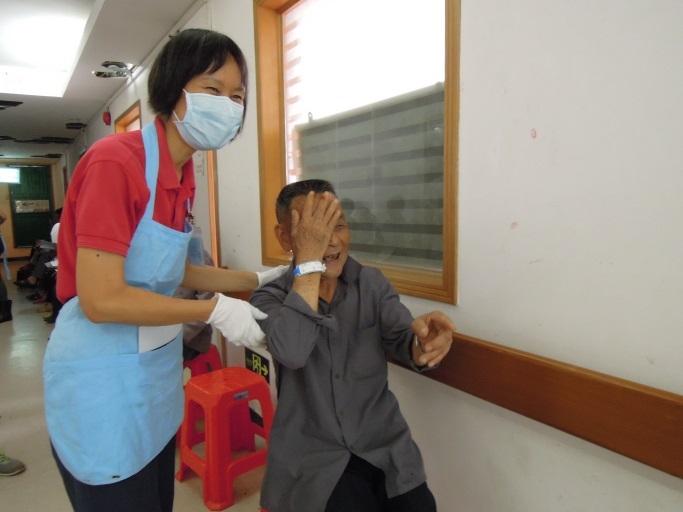
The remaining hours of the morning would be spent in useful employment, rotating feverishly between performing health checks and shuttling patients from room to room. And yet, amidst all this enthusiasm flowed an undercurrent of uneasiness, with the fear of being rejected for surgery looming over the patients’ families as they paced back and forth along the corridors outside the assessment rooms. Inside, any apprehension the elderly might have felt translated into the all-trusting, polite smiles they gave me as they held my hands in gratitude. To them, we represented their final hurdle, the key to the only source of light they could afford. At that moment, my heart sank as their systolics rose and rose against my will, and out of desperation more than anything else, I helped them take off as many sweaters as I could, leaving their arms bare but for the thin traditional cotton shirt most Hakka women wear. Knowing full well the futility of my request, I asked them to relax and wait for a second measurement before turning to the next batch of nervous-looking patients. When it was clear that, after persistent attempts, white coat jitters was only the tip of their hypertensive iceburg, we had no choice but to bid them farewell, our parting words of encouragement to seek proper medical advice met by nothing but a dejected nod.
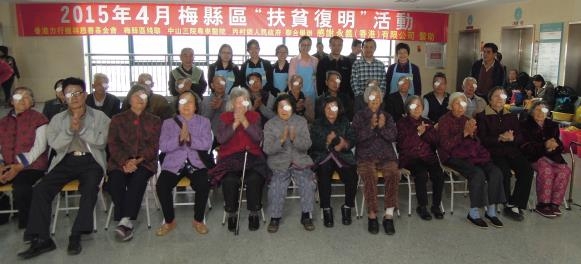
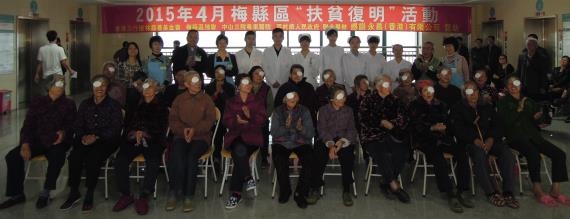
Seeing off successful recruits as they were escorted upstairs to prepare for surgery with buckets in tow (it didn’t take me long to discover its use as a suitcase for pajamas and other inpatient amenities) would always be my happiest memory of the trip; I experienced the sweetness of fulfillment that could only come from having a role-however small- in helping people see properly again. However, subsequent thoughts of having singlehandedly let down the unfortunate only sought to pick apart that fragile sugary coating, leaving me with nothing but a bitter aftertaste. Having to operate on the same level of optimism for each of the patients in this never-ending line became increasingly difficult as the number of rejections rose. What only took half a day from start to finish would already feel like a lifetime, and each new day became a mental exercise in itself. On the final day of service the defeatist gnarl in my stomach hit home, and for the first time, I learnt of the weight medical professionals, or ophthalmologists in this case, carry upon their shoulders in face of unpleasant situations.
It was not so much the success cases as the rejections that made me feel acutely the ridiculous sense of entitlement many in Hong Kong possess (including myself). With all the positivity I had hinging on a situation beyond my control, I was starting to understand how much more of a roller coaster ride it would be for me emotionally as a future doctor. Visiting newly recovered patients only served to give momentum to a cruel descent as I hurtled down from the peak of satisfaction upon seeing failed recruits stumble home empty-handed. I would have easily fallen into a pit of cynicism, were it not for the wise words by doctors at the Careers Talk organized by the WDA. In preparing us for the ups and downs in this field, they warned us not to fall prey to disillusionment, and instead, make the most out of it and bring home as much happiness as we could find. Sad as it was that some patients were turned away, it was comforting to know that we conducted what might have been their first ever body check, and helped them uncover previously undiagnosed hypertension!
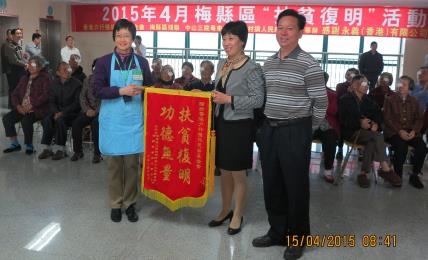
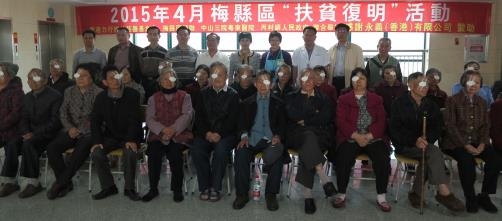
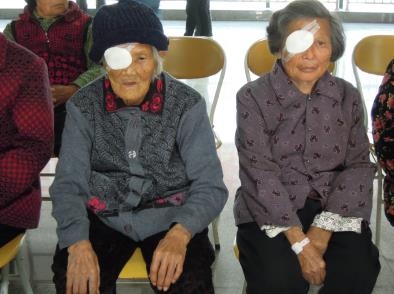
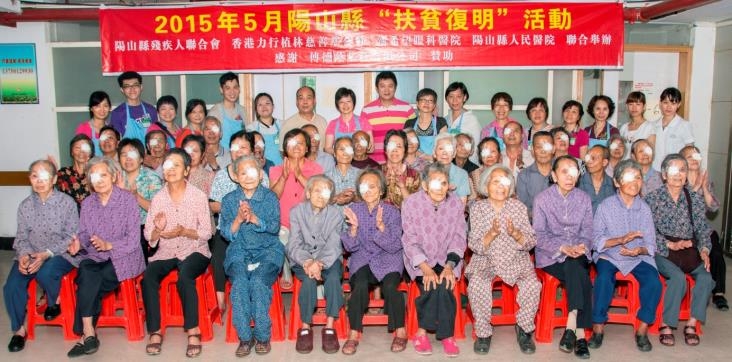
Re-embracing the serenity Queen Mary offered after a tumultuous ride in Meizhou was nothing short of surreal. In just four days, the cataract program provided over sixty villagers with a whole new standard of vision. What's more, it made me see the light.
Volunteer: Lam Ming Yin Alison (HKU Year 5)

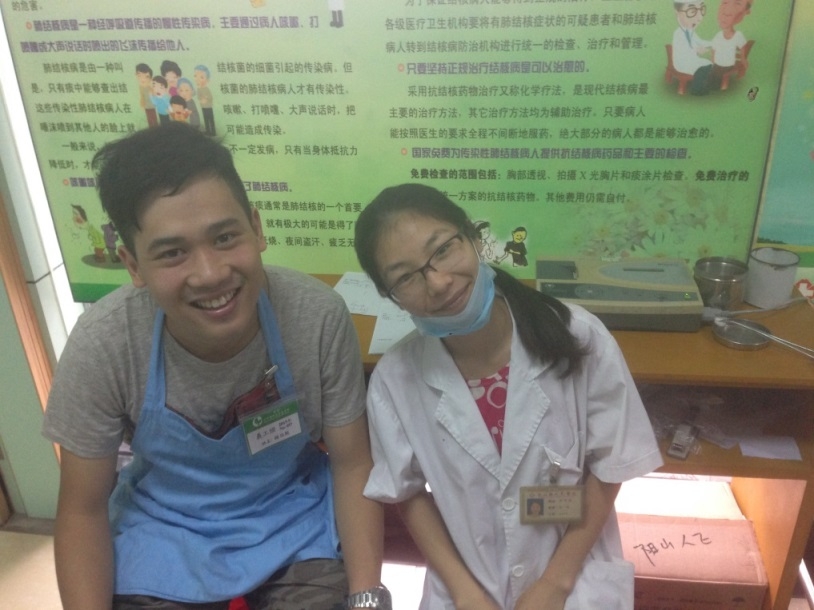
Getting my photo taken with the signpost that leads villagers to our workstation in Yue Dong Hospital, Meizhou

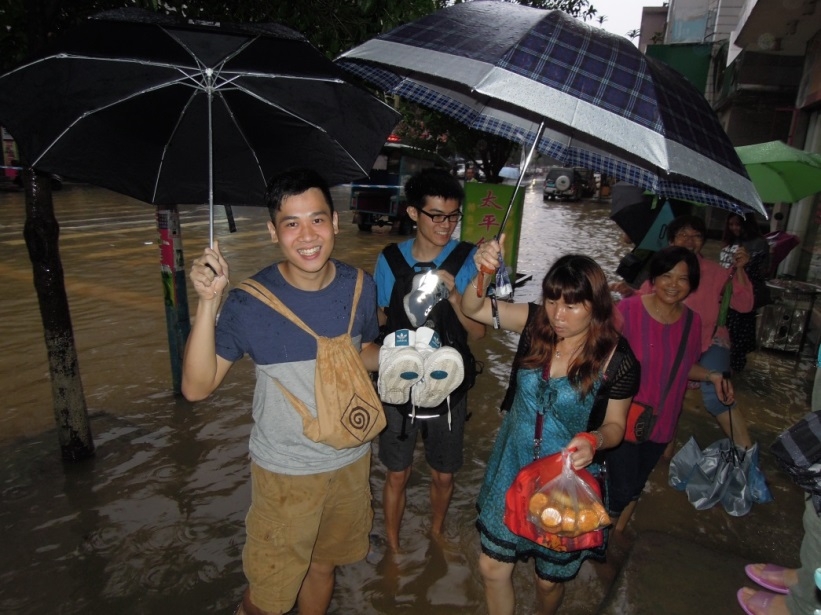
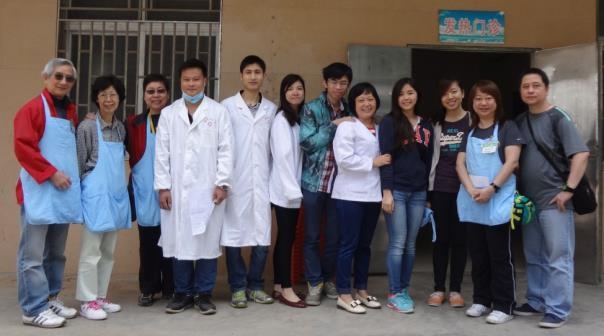
My last day the hospital. With me are staff from Green Action Foundation and local volunteers

Posing with Uncle Bi Fang, the team's oldest volunteer. His translating skills always come in handy!

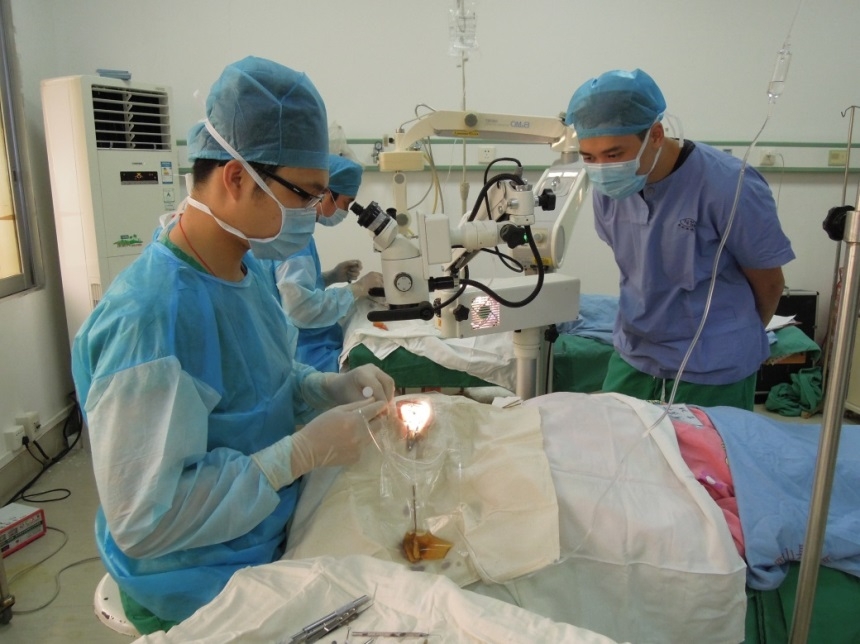
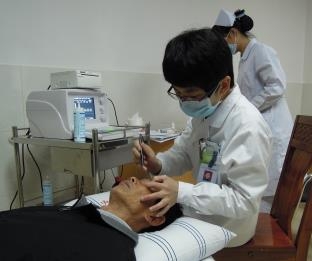
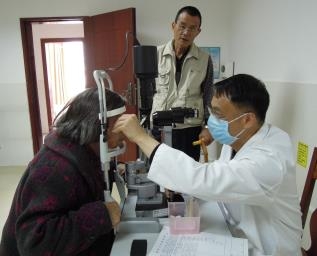
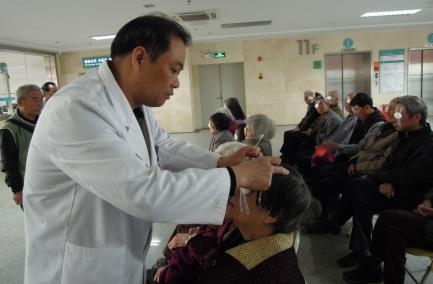
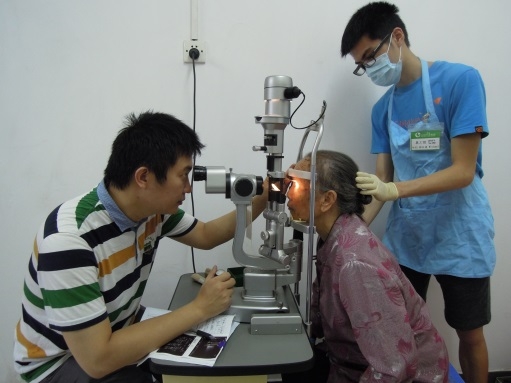
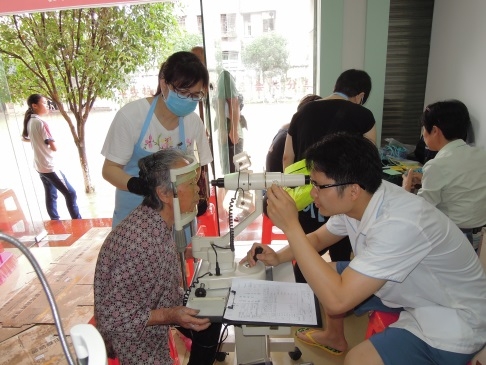
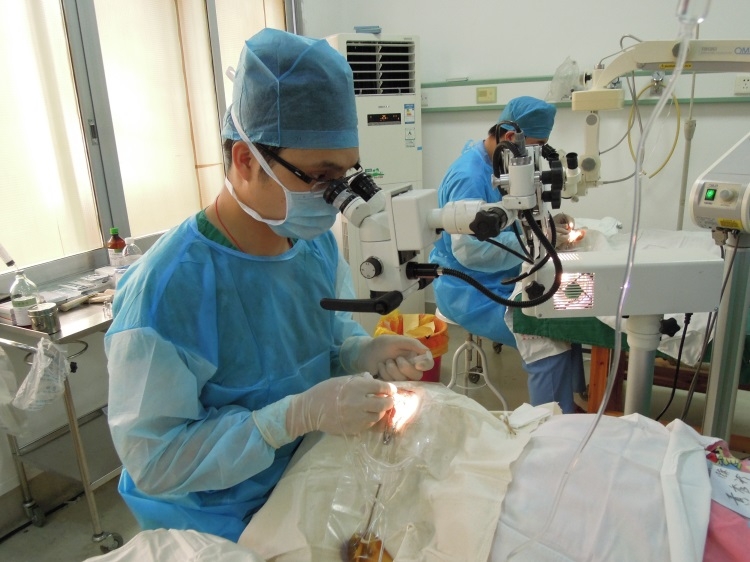
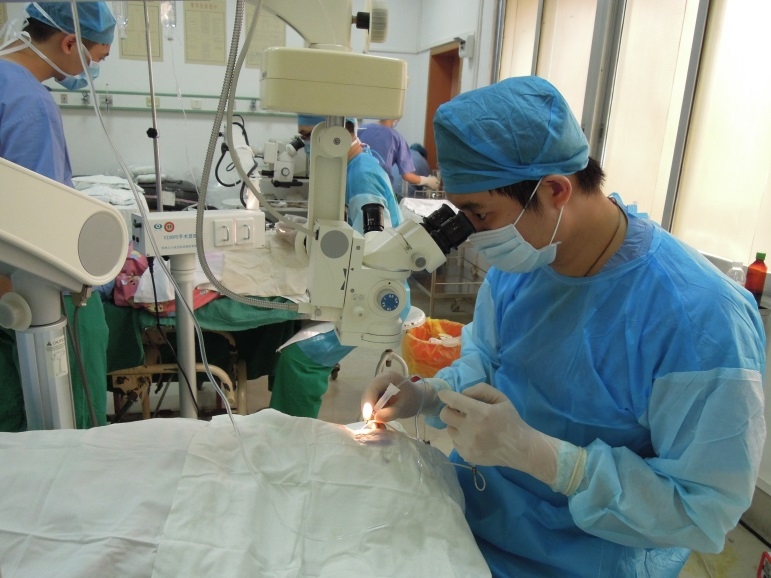
I had the chance to observe cataract surgeries in addition to performing health checks. The doctor next to me is Professor Liang from Zhong Shan Hospital, Guangdong